August 06, 2025
By: PhoenixBizz Staff Writer
PhoenixBizz is a division of Sofvue, LLC
Printed with permission of Data Titan and Sofvue LLC
Healthcare means trust, patients expect timely and super-effective treatments. This is something often overlooked by many hospital facilities.
When arriving at a hospital entrance, a patient arriving in an ambulance should be instantly escorted to the assigned department. Not just this, but they should also receive top-tier treatment without any delays. These services can be provided only when hospital staff are ready to receive patients and are constantly connected.
Patient care milestones can be successfully accomplished with the assistance of a patient care mobile application. Data from Grand View Research anticipates the global mobile health app market to grow at a CAGR of 14.9% from 2024 to 2030.
Trusted hospitals in Phoenix already use innovative healthcare mobile apps that are specifically tailored for their customers. A few examples include;
● Banner Health App
● ERAdvisor mHealth Platform by Dignity Health
● Wellth App by Health Choice Arizona
Still not sure whether a mobile app is the right path forward? This blog will help you evaluate whether your Phoenix hospital could benefit from a mobile application—one that responsibly addresses even the most minor patient needs. We’ll demonstrate why adopting a mobile-first approach to patient care is not just a technological upgrade, but a strategic move that enhances service delivery, patient satisfaction, and operational efficiency.
8 Ultimate Reasons Why Your Hospital Needs a Patient Care Mobile App
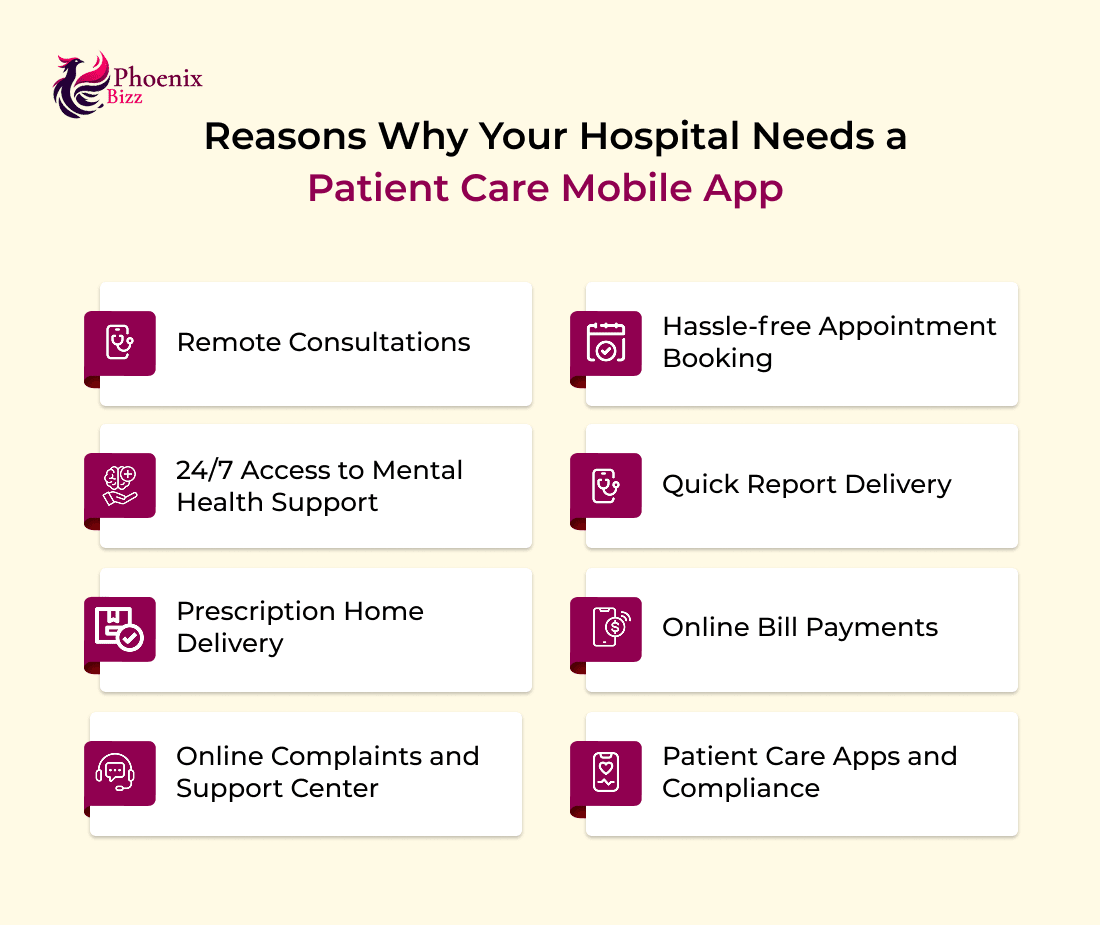
#1. Remote Consultations
The internet has effectively collapsed geographical barriers, making distance less of an obstacle in modern healthcare. A patient in Mesa, Glendale or Scottsdale can now seamlessly consult with a physician based anywhere in Arizona. Indeed, the world feels smaller than ever, and through mobile applications designed for patient care, remote consultations have become a standard offering—empowering patients across cities to access top-tier medical expertise without leaving their homes.
A Statista report estimates that the Online Doctor Consultations market will reach $2.58 billion in 2025. These figures point towards the rapidly growing demand for online consultations and remote patient care. Doctors can monitor and diagnose patients on a video call, providing timely treatment without requiring the patient to physically visit the hospital. This service is especially useful for patients living in remote areas or those who find it difficult to reach the hospital due to other physical limitations.
#2. Hassle-free Appointment Booking
Remember the days when hospitals were cluttered with people waiting in long lines? Patients and healthcare workers were both under immense pressure, often leading to tense situations, but thanks to modern patient care tactics, these unpleasant situations are avoidable. Phoenix Hospitals, using a cutting-edge mobile app, can accept online appointments, which means the patients no longer need to visit the hospital to finalize their appointment. One simple click on the mobile screen and a slot is reserved, no phone call waiting, or sending someone to the clinic to make the appointment.
The mobile app development agency you hire will add multiple features to the app to help the patients filter out their options. They can select their preferred doctor, time slot, date, department, and other things straight from the smartphone application.
#3. 24/7 Access to Mental Health Support
As per the National Institute of Mental Health, it is estimated that more than one in five US adults deal with a mental issue (59.3 million in 2022; 23.1% of the US adult population). Since mental health still remains taboo, people often think twice before seeking professional help. Especially teenagers, who think visiting a therapist will label them as ‘less popular’ or ‘not normal’ among their peers.
Mobile patient care apps allow users to conveniently schedule mental health therapy appointments and consultative sessions on the internet. The chat support feature provides people seeking privacy a different option from video calls for their mental health support while maintaining security. This not only benefits the users but also portrays your healthcare facility as a ‘patient-first’ service provider, which increases your online ratings. Offering quality services also provides your medical facility with the ability to provide more services to more patients.
#4. Quick Report Delivery
Patient care applications have revolutionized the way medical reports are delivered, making the process faster, safer, and far more convenient. What was once a time-consuming ordeal—involving long waits and repeated visits to testing centers—has now been replaced by instant access to results through mobile notifications. There is no longer a need to call or email the laboratory; patients are promptly alerted when their reports are available. From there, they can quickly schedule follow-up appointments with their physicians.
This technological advancement also facilitates the seamless sharing of digital reports with specialists, eliminating logistical barriers. By integrating diagnostics with treatment planning, patient care apps enhance the efficiency and responsiveness of healthcare delivery, making quality care more accessible, connected, and patient focused.
#5. Prescription Home Delivery
One of the most transformative features offered by modern patient care mobile applications is the integrated medicine home delivery service. This capability is particularly beneficial for vulnerable patient populations, including seniors, individuals managing chronic health conditions, and those with physical or transportation limitations. Traditionally, accessing prescription medications often involved navigating busy hospital pharmacies, enduring long wait times, or relying on others for assistance. The home delivery feature eliminates these burdens by allowing patients to upload prescriptions, place orders, and arrange secure doorstep delivery—all within a few taps on their mobile device.
Beyond convenience, this functionality plays a crucial role in supporting medication adherence. Timely access to prescribed medications helps prevent treatment gaps that can lead to complications or hospital readmissions. The addition of automatic refill reminders ensures that patients remain on schedule with their regimens, while built-in secure payment gateways add a layer of safety and trust to the transaction process.
Moreover, this feature strengthens the continuity of care. Healthcare providers can monitor prescription fulfillment patterns; flag missed refills and proactively intervene when necessary. For medical institutions and small medical practices, this creates a more responsive care model—one that extends beyond the clinic walls and into the patient's daily life. In a broader sense, medicine home delivery is more than just a logistical improvement; it represents a strategic shift toward a more accessible, efficient, and patient-first healthcare ecosystem.
#6. Online Bill Payments
Integrating an online bill payment gateway into a hospital’s mobile app can really enhance patient care by making financial transactions smoother and easing the administrative load. Here’s how it works:
1. Faster & Error-Free Payments: Patients can conveniently and securely pay their medical bills anytime, from anywhere, directly through the app. This eliminates the need for in-person visits, long queues at billing counters, and reduces overall wait times, streamlining the entire payment experience.
2. Enhanced Transparency: Real-time billing updates, digital receipts, and itemized breakdowns of charges allow patients to clearly understand what they are paying for. This transparency builds trust and minimizes disputes. If any discrepancies arise, patients can request clarifications or support directly through the app.
3. Improved Cash Flow for Hospitals: Immediate digital payments reduce revenue collection delays, allowing hospitals to maintain steady cash flow. With better financial visibility, healthcare institutions can allocate funds more strategically toward staffing, equipment, or patient programs.
4. Reduced Administrative Workload: By automating the billing process, mobile apps reduce paperwork, eliminate manual entry errors, and free up hospital staff to focus more on critical areas of patient care, rather than chasing payments or managing repetitive scheduling tasks.
5. Better Patient Assistance: Mobile apps can support patients through automated payment reminders, structured installment plans, and seamless insurance integration. These features help reduce financial stress and ensure that payments are made in a timely manner.
6. Fewer Billing Disputes and Follow-Ups: When charges are documented digitally and instantly accessible, the frequency of billing disputes significantly drops. Hospitals spend less time resolving misunderstandings, and patients enjoy greater peace of mind.
7. Integration with EHR & Patient History: Payment history can be cross-referenced with treatment records and Electronic Health Records (EHR), offering a holistic view of care and cost. This integration ensures accuracy and provides valuable insights for both patients and providers.
8. Customized Payment Options: Advanced mobile apps can offer tiered payment plans or allow patients to apply discounts or benefits from loyalty programs, charitable foundations, or hospital-administered subsidies, all within a user-friendly interface.
9. Data-Driven Financial Insights: Hospitals can use aggregated data from app-based billing systems to analyze trends in patient payments, identify common pain points, and optimize pricing structures or collection strategies for improved financial performance.
#7. Online Complaints and Support Center
Establishing an online grievance and support center within your patient care mobile app provides users with immediate access to assistance—without requiring additional administrative overhead. Whether a patient is disputing a billing charge, requesting a change in appointment time, or needs help navigating insurance claims, these concerns can now be addressed more efficiently through automation.
Traditionally, managing these requests requires dedicated staff to handle inquiries manually, which is both costly and time-consuming. However, integrating an AI-powered support and complaint resolution system significantly streamlines this workflow. Patients can conveniently submit their issues directly through the app, where each submission is automatically categorized, logged, and routed to the appropriate department.
As soon as a request is initiated, the patient receives a real-time notification confirming the status of their submission. Once the matter is resolved—whether automatically or with minimal human oversight—a follow-up alert is sent, ensuring transparency and closure. This not only improves patient satisfaction but also reduces the operational burden on hospital staff.
#8. Patient Care Apps and Compliance
In Arizona’s dynamic healthcare environment, regulatory compliance goes far beyond meeting basic legal requirements—it is a critical pillar for patient protection, data security, and the delivery of high-quality care. Patient care mobile applications are emerging as powerful tools in this space, quietly transforming how hospitals align with state and federal standards. These platforms not only support compliance with HIPAA and Arizona Department of Health Services (ADHS) regulations but often help institutions exceed those expectations.
1. Real-Time Documentation for Accurate and Auditable Records
Patient care apps simplify the process of documenting clinical interactions by enabling real-time data entry at the point of care. From medication administration logs to patient consent forms, each action is time-stamped and digitally stored, ensuring records are both accurate and compliant. This reduces the risk of human error and facilitates smoother audits and inspections, saving administrative time and improving accountability.
2. Alignment with Value-Based Care and CMS Requirements
Arizona hospitals operating under CMS guidelines benefit from app-integrated features that monitor key metrics such as patient outcomes, hospital readmission rates, and follow-up adherence. Automated alerts and scheduling reminders support continuity of care, making it easier for hospitals to track compliance with value-based care initiatives while enhancing patient engagement and satisfaction.
3. Culturally and Linguistically Inclusive Patient Experience
In a state as culturally diverse as Arizona, mobile apps offer the ability to deliver healthcare services in multiple languages and culturally appropriate formats. This not only helps hospitals meet Title VI requirements under the Civil Rights Act but also improves the quality of communication, fosters inclusivity, and strengthens relationships with underserved communities.
4. Advanced Security Protocols to Ensure HIPAA Compliance
Modern patient care apps are equipped with robust security features such as end-to-end encryption, biometric authentication, and multi-factor login protocols. These capabilities ensure the confidentiality, integrity, and availability of electronic health records (EHRs), satisfying HIPAA standards while building patient confidence in the digital care experience.
Looking For a Tech-Driven and High-Quality Patient Care App Development Company?
When viewed on a global scale, the United States leads in generating revenue from online doctor consultations—a clear indication that digital transformation has firmly taken root in the healthcare sector. Patients across the country are not only adapting to this shift but embracing it with confidence. Patient care mobile applications are playing a critical role in this evolution by bridging the gap between individuals and healthcare professionals, regardless of physical distance.
At PhoenixBizz, we’re proud to be your partner in navigating this digital healthcare revolution. As one of Phoenix, Arizona’s most respected mobile app development agencies—with more than two decades of proven experience, we’ve helped healthcare providers take bold, effective steps toward digital excellence. As a division of Sofvue LLC, our portfolio spans multiple industries and showcases our commitment to innovation, precision, and client success.
Here’s what sets us apart:
➔ Strategic Healthcare Expertise: We specialize in crafting HIPAA-compliant mobile apps tailored for clinics, hospitals, and care centers, ensuring regulatory alignment and a seamless user experience.
➔ End-to-End Support: From initial ideas to deployment, our expert analysts and top-tier developers work closely with your team to understand your audience and deliver a solution that drives engagement and outcomes.
➔ Scalable Solutions for Long-Term Growth: Our applications are built using modern frameworks and scalable architecture to grow with your organization’s evolving needs.
➔ Focused on Your Digital Visibility: We incorporate SEO best practices, app store optimization, and UI/UX design principles to ensure your digital product doesn’t just function—it thrives in the market.
➔ Ready to move forward? Let’s bring your next healthcare app idea to life.
📞 Call us at 623-845-2747
📧 Email us at [email protected]
🌐 Visit us online at phoenixbizz.com to explore our portfolio and discover how we’ve helped clients just like you lead in their industries.
➤ Healthcare Mobile App - HealthMed Portfolio
Also Read: How AI and Mobile Apps Are Revolutionizing Medical Practices: From Diagnosis to Treatment
RE: 11925
Citations:
Grand View Research: https://www.grandviewresearch.com/industry-analysis/mhealth-app-market#:~:text=The%20global%20mHealth%20apps%20market,monitor%20their%20health%2Drelated%20activities.
Wellth App: https://www.wellthapp.com/news/health-choice-az-partnership
Statista: https://www.statista.com/outlook/hmo/digital-health/online-doctor-consultations/united-states
NIH: https://www.nimh.nih.gov/health/statistics/mental-illness
Civil Rights Division: https://www.justice.gov/crt/fcs/TitleVI

John Tomblin
Senior Software Architect - PhoenixBizz